Disclosure: Some of the links in this post may contain affiliate links, so if you click on the link and purchase the item, I will receive a commission.
The other day, I was browsing the Libby app looking for audiobooks for my sons and me to listen to together when it hit me just how much reading has changed since I was their age.
So many things that feel completely normal today – borrowing audiobooks from the library, tracking every book you’ve read, downloading an eBook instantly, or ordering a book online with one click – didn’t exist when I was growing up.
It made me nostalgic for some of the “old ways” of being a reader while also appreciating how much easier many things have become. Here are a few of the biggest bookish changes I’ve experienced over the years.
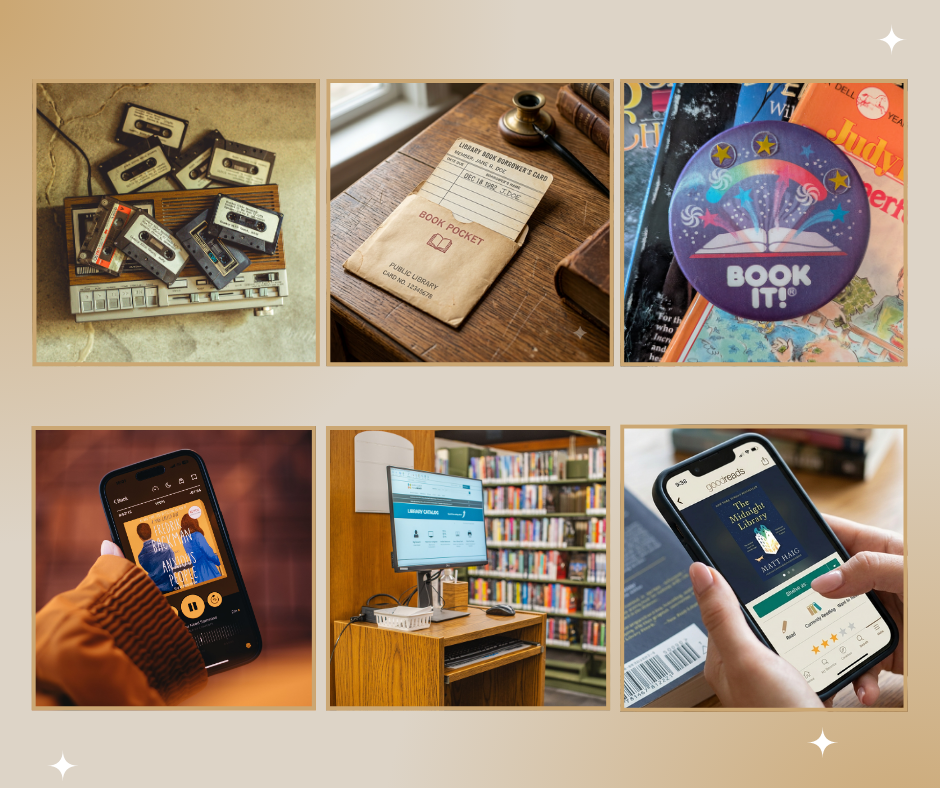
1. Audiobooks
Audiobooks Then:
When I was younger, we listened to audiobooks on cassette tapes. We would drive to the library and browse the selection. I remember one of the libraries we visited kept their audiobooks in baggies with a special closure on the top. When you checked out, the librarian took the cassette album out of the baggie. Also, not every book had an audiobook version available, so the choices were more limited. And who else remembers “Be Kind, Rewind” on tapes (and VHS tapes). Rewinding a cassette tape before returning it to the library was just part of the experience.
Audiobooks Now:
Today, many new releases are published simultaneously in print, eBook, and audiobook formats. You can get audiobooks added to your device without leaving your house. You can get them for free through library apps like Libby and Hoopla, or sign up for a trial on Audible as well as several different apps.
👉 To learn more about the history of the audiobook, check out this post.
2. Book Tracking
Book Tracking Then:
I don’t remember many people tracking the books they read when I was growing up, even in my college years. If people did, they kept track in a basic notebook. Most readers simply didn’t keep track of what they’d read.
👉 Read the story of a Columbus man who kept a journal with every library book he read starting in 1964 here.
Book Tracking Now:
I use Goodreads to track every book I read. I started tracking my books in 2021 and started by entering every book I owned. Then I tried to scan the recesses of my mind about books I had read that I either no longer owned or had gotten from the library. I know my list isn’t 100% accurate, but it’s better than nothing.
Tracking lets me know what books I’ve read so I don’t unintentionally reread a book or buy a book I already own.
Recently, I also started tracking my sons’ reading. Their reading lists won’t be perfect, but they’ll have a much more complete record of their reading than I ever will. Currently I track their reading in an Excel spreadsheet. It’s easy to edit, and I can send them the file whenever they want to start managing it themselves and upload it to whatever app they prefer.
3. Online Book Buying
Online Book Buying Then:
When I was little, buying books online didn’t exist. You had to go to a physical store to buy books. I can’t even think of a bookstore we frequented in my childhood, because there just weren’t that many. So, we visited the library A LOT.
When I was in college, Amazon was still known primarily as an online bookstore. It also sold CDs and movies, but books were definitely its identity. You had to order at least $25 to get free shipping. So as a poor college student, I’d add a book to my cart. Then wait until I had another book or two I wanted and added those to my cart until I had at least $25 to get the free shipping. Waiting a week for your books to arrive was completely normal.
Online Book Buying Now:
You can order a book today and have it at your house that same day or within a few days. It’s pretty amazing. There are so many places to buy books online (read more on that here). Every major bookstore chain has a website where you can order books – either sent to your house or picked up in-store. And there are several used bookstores online where you can order books at cheaper prices.
4. Book-It
Book-It Then:
When I was in elementary school, all the students would get a button from Book-It. If you grew up in the ’80s or ’90s, you know that those buttons felt like trophies. When we read so many pages or books, we’d earn a sticker to put on the button. Once the button was full, we could take it to Pizza Hut, show them our button and earn a free personal pan pizza. I don’t know if the pizza tasted better because it was free, but it certainly felt like it.
Book-It Now:
The program is still thriving, but the buttons were phased out long ago. Everything is now tracked in their app and kids can still earn a free personal pan pizza for meeting their reading goals.
Book-It recently had a promotion where adults could take in their buttons to participating stores and get a free personal pan pizza. You know I still had mine, and it was so nostalgic talking with the Pizza Hut employee (also a 90’s Book-It kid) about our buttons.
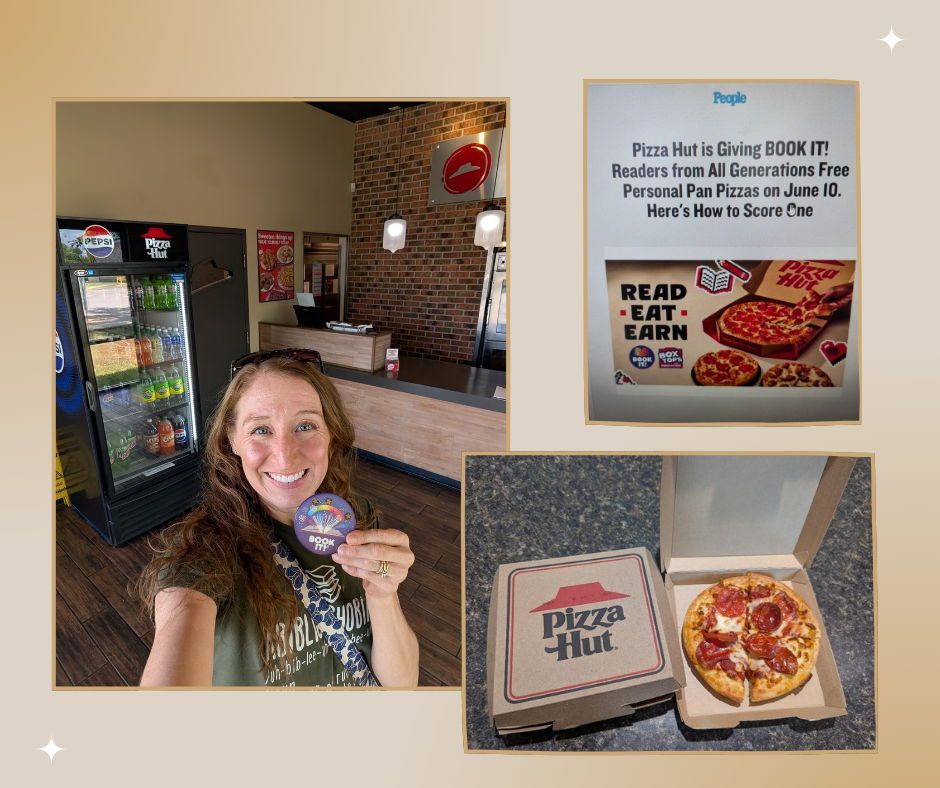
Picture of me getting free pizza for showing my old Book-It button
5. Circulation Cards
Circulation Cards Then:
When I was growing up and you checked out a school library book, it had two little cards in the front (or back) of the book. The librarian would take out both cards, write down the borrower and the due date, and then put one card back in the book and the other card in her filing system. I loved opening a library book and seeing the names stamped on the checkout card. It felt like getting a little glimpse into the book’s history.
Circulation Cards Now:
School libraries have gone digital, so there are no circulation cards used when kids check out books. Everything is online.
Final Thoughts
Looking back, I think every one of these changes has made reading more accessible in its own way. I still love browsing bookshelves and reading physical books, but I also appreciate being able to borrow an audiobook in seconds or keep track in an app of every book I’ve read.
The codex – the familiar book with pages bound together – has remained remarkably unchanged for nearly 2,000 years. Yet the way we discover, borrow, buy, and enjoy books has transformed dramatically, even within my lifetime.
Even though technology has changed nearly every part of the reading experience, the heart of it hasn’t changed at all. A great story is still a great story, whether it comes from a cassette tape, an eBook, or a well-loved library book that’s been read by dozens of people before you. It makes me wonder what today’s kids will someday tell their own children about “the old days” or reading.
What bookish change has had the biggest impact on your reading life? Is there something from the “old days” you wish would come back? And what do you think the next big reading innovation will be?
✨ Come hang out with me for daily bookish chats on Facebook or Instagram!
If you enjoyed this post, here are a few others you may be interested in:


Leave a Reply